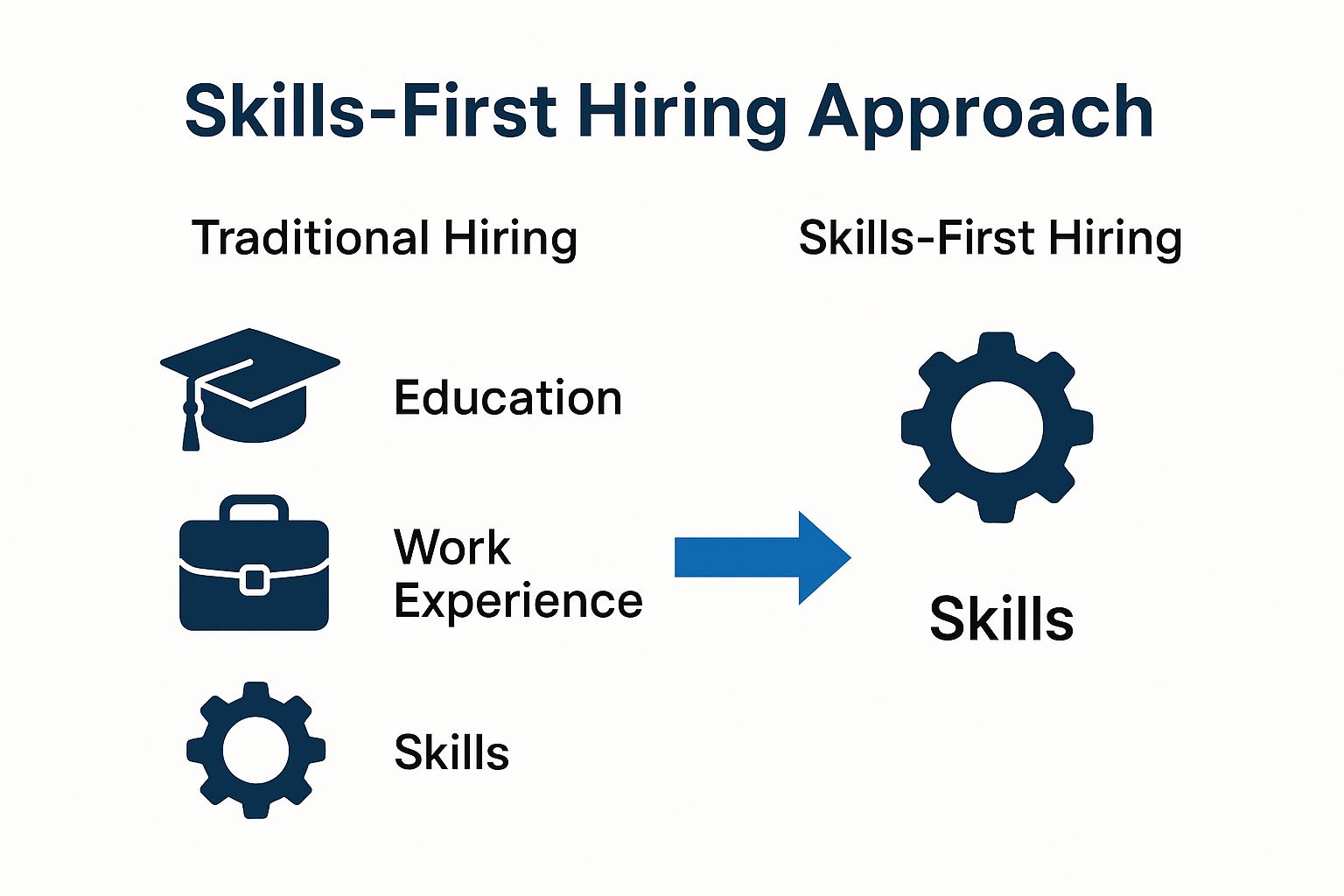
For a long time, hiring has followed a familiar script: scan for degrees, look for big-name employers on the CV, and hope the person can do the job. But in recent years, a shift has started to take hold—one that puts skills, not just credentials, at the centre of how we find and choose people for roles. It’s called skills-first hiring, and while it’s not exactly new, it’s finally starting to gain real traction.
Written by Jude Mahoney
Agile Delivery Lead | Business Analyst Mentor | 20 Years Experience
LinkedIn: Jude Mahoney
What is Skills-First Hiring?
In simple terms, a skills-first approach means prioritising what a person can do over where they went to school, what their job title was, or even how many years they’ve been doing something. Instead of focusing on formal qualifications, it looks at actual capabilities—often demonstrated through assessments, portfolios, project work, or certifications that show up outside the traditional degree path.
It’s the difference between asking, “Do you have a degree in computer science?” and asking, “Can you build and deploy a web app?”

Why is this happening now?
Several forces are driving the shift:
- Talent shortages: Employers are struggling to fill roles, especially in tech, healthcare, and skilled trades. By filtering people out for not having a certain degree, companies are often cutting themselves off from a massive pool of capable candidates
- Changing views on education: More people—especially younger workers—are opting out of university or pursuing alternative education like bootcamps, micro-credentials, and online certifications. And they’re gaining real, relevant skills along the way. The sheer cost of a university education versus the Return on Investment (ROI) now barely seems worth it, and every year, universities go bust as a result
- Equity and access: A skills-first model helps level the playing field. It opens doors for people from non-traditional backgrounds, those who couldn't afford university, or individuals changing careers later in life. It’s a step toward a fairer job market.
The benefits (and a few challenges)
There’s plenty to like about this approach. Employers can tap into a wider and more diverse talent pool. People get judged more on what they bring to the table than what’s written on it. And in fast-moving industries, where skills evolve quickly, it makes more sense to focus on what someone can do right now rather than what they did five years ago. Given the changing nature of the tech industry, this is especially true!
But it’s not without challenges. It takes more effort to assess skills properly—especially for roles where the output isn’t as tangible. Managers and HR teams have to rethink how they write job descriptions, evaluate candidates, and even structure interviews. Plus, old habits die hard. There’s still an ingrained bias toward certain schools, job titles, and career paths.
What this means for workers (and employers)
If you’re someone looking for work, this trend is good news. It means your real-world experience, side projects, or skills learned outside the classroom might finally get the recognition they deserve. But it also means you need to be able to prove those skills—whether through a portfolio, a test, or a story about how you solved a real problem.
For employers, it’s an opportunity to build stronger, more resilient teams. People who are hired for what they can do often bring more motivation and a clearer sense of purpose. But companies need to be intentional, investing in better hiring tools, upskilling recruiters, and giving candidates a fair chance to show what they’re capable of.
Final Thought
Skills-first hiring isn’t about lowering the bar. It’s about moving the bar to a more relevant place. In a world where talent is everywhere but opportunity isn’t, this might just be the shift we need. This is also where we want Elisto to come in, a lot of other professional courses are very woolly and a university degree in the UK can cost 100 x the cost of one of our courses. Ultimately, we teach what we use and have used for the last two decades in the tech industry.
Don't just take our word for it though, there's a highly informative article here: Skills or degree? The rise of skill-based hiring for AI
Share: