
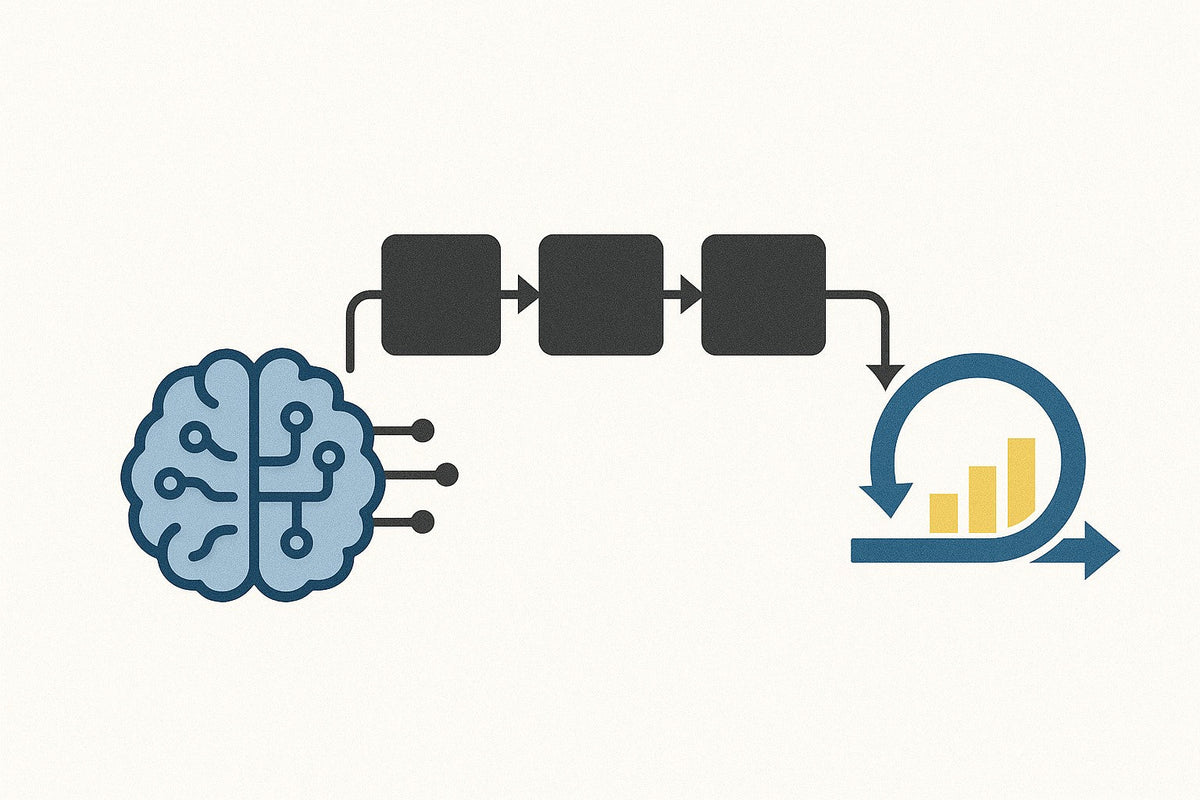
Agile Business Analysts still need strong foundations in requirements, user stories, stakeholder management and Agile delivery. AI now adds another layer: analysts who can use AI tools, interpret data, manage risk and connect technical capability to business value are better placed to stay relevant and stand out in the job market.
Written by Jude Mahoney
Agile Delivery Lead | Business Analyst Mentor | 20 Years Experience
LinkedIn: Jude Mahoney
Key Takeaways
- Agile remains the foundation of the modern Business Analyst role, alongside user stories, requirements gathering, stakeholder management and user experience
- AI is changing how BA work gets done by automating routine documentation, accelerating analysis and supporting faster decision-making
- Prompt engineering, AI-enhanced tool use, data interpretation, AI risk management and domain-specific AI application are valuable emerging skills
- AI-enabled Business Analysts create value by translating between business objectives and technical AI teams
- The strongest career position combines traditional BA skills, Agile delivery, AI literacy, strategic thinking and human stakeholder skills
- Elisto’s Agile Business Analysis Boot Camp is designed to develop practical Business Analysis skills for modern delivery environments
The Real-World Agile BA Skills Employers Still Need
AI may be changing the tools, but it does not remove the need for strong Business Analysis fundamentals. The most useful starting point is still the core work of understanding problems, clarifying needs, shaping requirements and helping teams deliver value.
The original Elisto job-market analysis highlighted five recurring skill areas:
- Agile methodology
- User stories
- Requirements gathering
- Stakeholder management and social skills
- User experience
These skills remain the base layer. AI becomes useful when it strengthens them rather than replacing them.
1. Agile Methodology
Agile remains central to many Business Analyst roles. Analysts need to understand approaches such as Scrum, Kanban and SAFe, but more importantly they need to know how to work iteratively, collaborate across teams, manage changing priorities and keep delivery focused on customer and business value.
2. User Stories
Writing clear user stories remains a practical BA skill. AI can help draft or refine them, but the analyst still needs to understand the user need, the business outcome, dependencies and what good acceptance criteria should look like.
3. Requirements Gathering
Requirements work now combines interviews, workshops, observation, data analysis and increasingly AI-assisted analysis. The important skill is not simply writing requirements. It is discovering what the business actually needs, spotting gaps and turning ambiguity into something a delivery team can act on.
4. Stakeholder Management
This remains one of the hardest parts of the role to automate. Business Analysts often need to manage competing priorities, difficult conversations, organisational politics and misunderstandings between technical and business teams.
5. User Experience
Modern BAs increasingly need to understand the end-user journey. Persona development, journey mapping, user research and feedback all help make sure requirements lead to something people can actually use.
How AI Is Changing the Agile Business Analyst Role
AI is not creating an entirely new profession. It is changing the way existing BA work can be performed and increasing the value of analysts who know how to use new capabilities responsibly.
Automating Documentation and Requirements Work
AI can create first drafts of user stories, acceptance criteria, test cases, meeting summaries and process documentation from notes or conversations. It can also scan existing documents for gaps, contradictions and unclear language.
The value for the BA is time. Routine drafting can be accelerated, leaving more time for validation, stakeholder engagement and strategic thinking.
Enhancing Data Analysis
AI-powered analytics can process large datasets, identify patterns and surface trends that may be difficult to spot manually. This allows Business Analysts to support recommendations with stronger evidence and move beyond basic reporting.
Streamlining Agile Processes
AI features are increasingly appearing in tools used for backlog management, sprint planning, documentation and collaboration. These capabilities can help with prioritisation, dependency identification, draft documentation and predictive insight around delivery risks.
Supporting Real-Time Decisions
AI can also provide faster feedback on changing customer behaviour, operational performance and market signals. For an Agile BA, this makes it easier to adjust priorities quickly when the evidence changes.
The Strategic Value of an AI-Enabled Agile Business Analyst
Bridging Technical AI Solutions with Business Objectives
One of the strongest opportunities for Business Analysts is becoming the bridge between AI specialists and the business. Technical teams understand models, data and platforms. Stakeholders understand goals, customers and operational problems. The BA helps connect the two.
That means translating business objectives into realistic requirements, defining success measures, identifying data needs and setting sensible expectations around what AI can and cannot do.
Using Agile for AI Implementation
AI solutions often improve through repeated testing and learning rather than being delivered perfectly first time. That fits naturally with Agile delivery.
- Create a small first version that delivers early value
- Collect feedback after each sprint
- Refine acceptance criteria as the AI solution matures
- Prioritise enhancements using real performance data
Improving Stakeholder Communication
AI projects can create confusion and concern. Business Analysts add value by explaining technical issues in plain language, managing expectations and helping stakeholders understand problems such as poor data quality, model limitations or uncertain outputs.
Top AI Skills for Agile Business Analysts
1. Prompt Engineering
Prompt engineering is the ability to give AI systems clear instructions, relevant context and useful constraints. For Business Analysts, this can improve the quality of draft user stories, requirements, workshop outputs and analysis.
The important point is not learning clever prompt tricks. It is learning how to structure a request clearly enough that the AI produces something useful, then reviewing and challenging the result.
2. AI-Enhanced Tool Proficiency
Modern Agile and collaboration tools increasingly include AI features. Business Analysts should understand what these features can automate, where they save time and where human review is still required.
3. Advanced Data Interpretation
As AI produces more sophisticated analysis, BAs need stronger data literacy. They should be able to interpret outputs, spot unusual results, understand basic statistical concepts and turn technical findings into practical business recommendations.
4. AI Risk Management
AI creates new risks that Business Analysts may need to capture in requirements and decision-making, including:
- Data privacy and security
- Algorithmic bias
- Ethical concerns
- Poor or incomplete data
- Integration problems
- Over-reliance on AI-generated outputs
A BA who understands both the business need and the risk can become a valuable part of responsible AI delivery.
5. Domain-Specific AI Application
The most commercially useful AI skill may be knowing where AI actually makes sense in a specific industry or business process. Domain knowledge helps the analyst identify useful opportunities rather than forcing AI into problems where it adds little value.
Technical Knowledge You Need - Without Becoming an AI Engineer
AI-enabled Business Analysts do not need to become programmers or machine-learning engineers. They do, however, need enough technical literacy to work confidently with specialist teams.
- Basic data structures and data quality
- Database fundamentals
- APIs and integration concepts
- Common AI and machine-learning concepts
- Business intelligence and visualisation tools
- The limitations of AI systems
A working understanding of supervised, unsupervised and reinforcement learning can also help a BA understand what type of AI approach may fit a problem, without requiring them to build the model themselves.
Strategic Analysis Skills Become More Important, Not Less
AI is very good at processing information. It is much weaker at understanding organisational context, internal politics, competing priorities and whether a technically possible solution is commercially sensible.
This means human strategic analysis becomes more important as routine analysis becomes easier to automate.
- Identify where AI could create genuine business value
- Connect AI initiatives to wider strategy
- Assess likely ROI and trade-offs
- Evaluate whether the organisation is ready for the change
- Challenge AI outputs that do not fit the real-world context
How to Build an AI-Ready BA Portfolio
Employers are more likely to be convinced by evidence than by a CV that simply lists “AI” as a skill. A useful portfolio can show how you applied AI in a realistic BA context.
- An AI-assisted set of user stories with your human review notes
- A before-and-after process showing how AI reduced manual work
- A case study identifying an AI use case and its risks
- A data-analysis example where you turned AI outputs into a business recommendation
- A stakeholder communication example explaining an AI concept in plain language
The purpose is to demonstrate judgement and application, not just tool usage.
Ethical AI and Responsible Business Analysis
As AI becomes more involved in business decisions, Business Analysts need to think about privacy, transparency, bias and accountability.
A good BA should be able to ask: What data is being used? Could the output unfairly affect a group of people? Who is responsible for the decision? Can the result be challenged? What happens when the AI is wrong?
These questions belong naturally within good requirements and governance work.
Career Opportunities for AI-Enabled Business Analysts
The second Elisto article highlights several emerging job titles that combine Business Analysis with AI and digital transformation, including:
- AI Business Analyst
- AI Requirements Specialist
- AI Product Owner
- Digital Transformation Analyst
- AI Implementation Consultant
The exact job title matters less than the direction of travel. Organisations increasingly need people who can understand business problems, work with technical AI teams and help turn new capabilities into practical outcomes.
How to Future-Proof Your Business Analyst Career
1. Keep the BA Fundamentals Strong
Do not abandon requirements, stakeholders, process thinking, user stories or Agile delivery. These remain the foundation.
2. Add Practical AI Literacy
Learn what AI can do, how to use common tools, how to write effective prompts and how to evaluate outputs.
3. Strengthen Data Skills
Improve your ability to understand data, question analysis and explain findings to non-technical stakeholders.
4. Build Domain Expertise
The more you understand a real business environment, the better you can judge whether an AI solution is useful, realistic and worth the investment.
5. Keep Learning
AI tools and practices will keep changing. The durable skill is the ability to learn, test and adapt without losing sight of the business problem.
Jude's Real-World View
After around 20 years working across Business Analysis, Agile and delivery, Jude Mahoney’s approach is grounded in practical application rather than chasing technology for its own sake.
AI can make a Business Analyst faster. It can help with drafting, data analysis and repetitive work. But the analyst still has to understand the problem, ask the right questions, manage stakeholders and decide whether the proposed change will create real value.
The strongest modern BA is therefore not just “AI-enabled”. They are a capable Business Analyst first, with enough AI literacy to use the technology well and enough judgement to know when not to.
Frequently Asked Questions
What AI skills should an Agile Business Analyst learn?
Useful starting points include prompt engineering, AI tool proficiency, data interpretation, AI risk awareness and the ability to identify valuable AI use cases within a business domain.
Do Business Analysts need to understand machine learning?
A working understanding helps, especially when collaborating with data and AI teams. You do not need to build machine-learning models, but you should understand the main concepts, data requirements and limitations.
Will AI replace Agile Business Analysts?
AI can automate parts of the role, especially routine documentation and analysis. It is less capable at stakeholder management, strategic judgement, organisational context and deciding what the business should do. The role is more likely to evolve than disappear.
Is prompt engineering useful for Business Analysts?
Yes, when treated as a practical communication skill. Better prompts can produce better first drafts and analysis, but the BA still needs to validate the result.
What makes an AI-enabled Business Analyst valuable?
The ability to connect business objectives with technical AI capabilities, manage stakeholders, understand risks and turn AI outputs into decisions and measurable business value.
Develop Practical Agile and AI-Enhanced BA Skills
A lot of AI training focuses heavily on tools or theory. Elisto’s approach is to build strong Business Analysis foundations and then show how modern technology fits into real delivery work.
The Agile Business Analysis Boot Camp is designed to develop practical skills across Agile delivery, requirements, user stories, stakeholder management, AI awareness and real-world Business Analysis.
Explore the Agile Business Analysis Boot Camp at Elisto.
Share:
Why Hiring Young Talent from Elisto Could Be the Smartest Move Your Business Makes This Year
AI Business Analyst training with Agile