
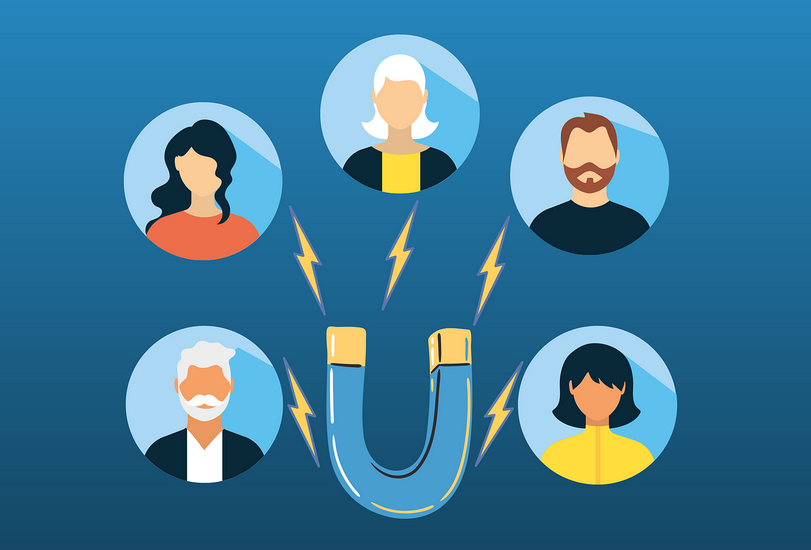
While AI will automate routine tasks and data processing, saving analysts up to 6 hours daily, human business analysts remain irreplaceable for their strategic thinking, ethical decision-making, and contextual understanding that AI cannot replicate.
Written by Jude Mahoney
Agile Delivery Lead | Business Analyst Mentor | 20 Years Experience
LinkedIn: Jude Mahoney
Key Takeaways:
• AI is already automating parts of business analysis, including documentation, data processing, meeting summaries, requirements support and process analysis.
• The Business Analysts most at risk are those whose role is mainly repetitive, administrative or based on producing documents rather than solving business problems.
• AI still cannot replace the human ability to understand organisational context, manage difficult stakeholders, make ethical judgments and navigate ambiguity.
• No-code, low-code and direct stakeholder-to-developer working models are also changing the traditional BA role, so the threat is broader than AI alone.
• The strongest future for Business Analysts is a human-AI partnership: let AI handle speed and scale, while the analyst provides context, challenge, judgment and strategic direction.
• BAs who develop AI literacy, domain expertise, strategic advisory skills and strong stakeholder capabilities will be better placed to adapt as the profession changes.
Will AI overtake Business Analysts? The direct answer
No — but AI will overtake parts of the Business Analyst role.
That distinction matters. Artificial intelligence is very good at processing information, identifying patterns, drafting documents and completing repeatable work quickly. Those are all activities that can sit inside a Business Analyst's day. As AI tools improve, more of that work will be automated or accelerated.
But effective business analysis is not simply the production of requirements documents, process maps or reports. The real value of a skilled BA comes from understanding what a business is trying to achieve, asking the questions nobody else is asking, bringing conflicting stakeholders together, challenging weak assumptions and helping people make better decisions.
AI can support that work. It can make it faster. In some cases, it can remove hours of manual effort. But it does not remove the need for human accountability, context and judgment.
The more realistic future is therefore not 'AI versus Business Analysts'. It is Business Analysts who use AI effectively versus Business Analysts who do not.
What AI can automate in Business Analysis
AI's biggest immediate impact is on repeatable, information-heavy work. Modern tools can process huge volumes of structured and unstructured information far faster than a human analyst. That changes where a BA should spend their time.
1. Requirements documentation and first drafts
Generative AI can produce first drafts of requirements, user stories, acceptance criteria, summaries and standard documentation from relatively small amounts of input. It can also review written requirements and highlight possible gaps, ambiguity or inconsistency.
This does not mean a machine truly understands the business need. It means the mechanical act of turning information into a structured first draft is becoming much faster.
2. Meeting notes, summaries and actions
AI can already summarise meetings, extract actions, organise notes and create follow-up communications. Work that once required a BA to spend an hour rewriting notes can increasingly happen in minutes.
3. Data processing and exploratory analysis
AI systems can clean data, generate summary statistics, identify patterns, create initial visualisations and work across datasets that would take a human much longer to process manually. They can also analyse unstructured information such as customer comments, support tickets and stakeholder feedback.
This gives analysts a much faster starting point for investigation. The value then shifts from producing the analysis to interpreting what it actually means.
4. Process mapping and process analysis
Specialist automation and AI tools can ingest existing documentation, observe system activity and help create process maps. More advanced systems can identify bottlenecks, suggest optimisation opportunities and model possible process changes.
Process mapping remains useful, but producing a diagram is no longer enough to justify the value of a Business Analyst on its own.
5. Code, SQL and technical interpretation
AI can translate code into plain language, generate boilerplate code and create initial Python or SQL based on analyst instructions. A BA does not need to become a software developer, but AI makes it easier to work closer to data and technical teams without manually writing everything from scratch.
6. Routine reporting and document scanning
Standard reports, document reviews, information extraction and recurring communications are all areas where AI can reduce manual effort. In practical terms, this can free a Business Analyst to spend less time formatting information and more time deciding what should happen next.
What AI cannot replace
AI's speed can be impressive, but speed is not the same as understanding. Business analysis takes place inside organisations full of incomplete information, competing priorities, politics, risk and people. That is where human capability still matters most.
1. Business context
A good Business Analyst understands how a process, requirement or technology decision fits into a wider organisation. They know that the same data can mean different things depending on commercial objectives, regulation, customer expectations, delivery constraints and internal culture.
AI can identify patterns. It cannot reliably understand all of the unstated context surrounding those patterns.
2. Stakeholder management
Stakeholders rarely arrive with perfectly clear, consistent requirements. They disagree. They change their minds. They protect their own priorities. Sometimes what they say they want is not what they actually need.
A skilled BA listens, challenges, negotiates, builds trust and creates alignment between people with different goals. That is a human relationship problem, not simply an information-processing problem.
3. Judgment in ambiguous situations
AI works best when it has clear inputs and recognisable patterns. Real projects are often messy. Decisions need to be made with incomplete evidence, competing risks and no single obviously correct answer.
Business Analysts add value by weighing the options, understanding consequences and helping teams make sensible decisions when certainty is impossible.
4. Ethical and responsible decision-making
AI-generated recommendations can contain bias, confidently present incorrect information and produce outputs that are difficult to explain. This is particularly important where decisions affect customers, employees, privacy, security or regulated processes.
A Business Analyst can challenge whether an AI-enabled process should be used, not merely whether it can be used. Human accountability remains essential.
5. Domain expertise and real-world experience
Years of experience in a particular industry allow an analyst to recognise risks, assumptions and consequences that a generic AI system may miss. Experienced BAs know which questions matter because they have seen what happens when those questions are ignored.
Domain knowledge helps a BA interpret information properly rather than accepting a technically plausible answer at face value.
6. Critical thinking and challenge
AI can generate an answer very quickly. The Business Analyst still has to decide whether that answer is useful, complete, realistic and safe.
That requires healthy scepticism. Analysts need to question assumptions, test alternative explanations, validate outputs and compare AI-generated conclusions against the reality of the organisation.
The real threats to Business Analyst careers
AI is the most obvious threat, but it is not the only force changing the profession. Several shifts are reducing the value of traditional BA activities at the same time.
Generative AI replacing low-value BA tasks
Documentation, user stories, process descriptions, standard reporting and first-pass analysis can increasingly be produced with AI support. If a BA's role is mainly to create these outputs, the organisation may reasonably ask why it still needs the same amount of human time to do them.
Machine learning supporting requirements gathering
Tools can analyse large volumes of stakeholder feedback, identify recurring themes and highlight contradictions or missing information. Requirements gathering remains human-centred, but the processing layer around it is becoming increasingly automated.
No-code and low-code platforms reducing translation layers
No-code and low-code platforms allow business teams to configure workflows and applications without relying on the same traditional development process. This can reduce the need for a BA to act purely as a translator between a business user and a technical team.
Direct stakeholder-to-developer delivery models
Some teams are already working with shorter communication chains, placing stakeholders closer to developers and product teams. AI-assisted tools can also translate business language into more technical outputs. That challenges the idea that every project automatically needs a separate BA layer.
Automation of process mapping and quality checks
When tools can generate process maps, spot inconsistencies and suggest improvements, simply producing artefacts is no longer a strong value proposition. The BA has to move beyond the artefact and own the thinking around it.
Which Business Analysts are most at risk?
The profession is unlikely to disappear, but not every version of the role is equally protected. The biggest risk sits with analysts whose work is easy to describe as a sequence of repeatable tasks.
• BAs who spend most of their time producing documents, meeting notes, process maps and standard user stories without adding much interpretation or challenge.
• BAs who act mainly as messengers between stakeholders and developers rather than helping either side make better decisions.
• BAs with very limited domain knowledge who rely on templates and generic techniques rather than understanding how the business actually works.
• BAs who avoid AI tools completely and continue working manually even when routine work can be completed faster and more accurately with sensible automation.
• BAs who treat requirements as orders to record rather than assumptions to investigate, test and challenge.
• BAs whose value is based on knowing a particular document format rather than solving difficult business problems.
The safest place to be is not the person who can create the most documentation. It is the person the organisation trusts to understand the problem, challenge the thinking and help move the right solution forward.
How Business Analysts should adapt to AI
The answer is not to compete with AI at the tasks AI does best. It is to use those tools to remove low-value effort while strengthening the parts of business analysis that require human judgment.
1. Learn to work with AI, not around it
Business Analysts should become comfortable using LLMs and generative AI for drafting, summarising, analysis support, idea generation and quality checks. The aim is not to outsource thinking. It is to accelerate the mechanical work so more time can be spent on the difficult work.
2. Move from documentation to strategic advisory
Higher-value BAs connect business problems to technology, process and commercial outcomes. They help leaders understand trade-offs, define what success looks like and decide where change will create genuine value.
That is a stronger position than being the person who simply records what somebody else has already decided.
3. Build deeper domain expertise
Specialist knowledge creates context that generic automation struggles to reproduce. A BA who understands a sector, its customers, regulation, operating model and common failure points can ask better questions and interpret AI output more intelligently.
4. Become strong at AI implementation and governance
As organisations adopt more AI, they need people who can translate business needs into sensible AI use cases, define controls, identify risks and ensure outputs are validated. Business Analysts are well placed to become the bridge between technical AI capability and practical business value.
5. Strengthen stakeholder and facilitation skills
The more technology handles information processing, the more valuable human communication becomes. BAs should become better at workshops, negotiation, facilitation, conflict resolution, influencing and explaining complex ideas in simple language.
6. Keep adapting
The tools will continue to change. The strongest long-term skill is the ability to learn continuously, test new approaches and update the way you work without losing the fundamentals of good analysis.
New hybrid roles are likely to grow
The market is already moving toward roles that combine traditional analysis with technology, product and transformation skills. Titles such as AI Business Consultant, Digital Transformation Analyst, Product Owner and Business Value Engineer reflect the direction of travel.
The exact job title matters less than the underlying shift: businesses increasingly value people who can understand a problem, work across disciplines and turn new technology into useful outcomes.
Skills Business Analysts need in the AI era
Business Analysts do not all need to become programmers or data scientists. They do need enough technical literacy to use modern tools intelligently and enough human capability to add value where automation stops.
• AI literacy: Understand what generative AI and machine learning can do, where they fail and how to use them responsibly.
• Critical thinking: Challenge outputs, test assumptions and distinguish a confident answer from a correct one.
• Domain expertise: Build enough real-world knowledge to understand why the data matters and what the organisation may be missing.
• Stakeholder management: Build trust, handle disagreement, uncover hidden needs and bring people toward a workable decision.
• Strategic thinking: Connect requirements and technology choices to wider business goals, value and risk.
• Data confidence: Be comfortable interpreting data, questioning analysis and using AI-assisted tools to investigate problems.
• Communication: Explain complex findings clearly to technical and non-technical audiences.
• AI governance awareness: Understand privacy, bias, explainability, validation, accountability and the risks of relying blindly on automated outputs.
• Agile and product delivery skills: Understand user journeys, story mapping, roadmaps and how analysis supports fast, iterative delivery.
• Continuous learning: Treat AI as an evolving part of the BA toolkit rather than a one-off subject to learn and forget.
The productivity opportunity: AI can give BAs time back
One of the most positive outcomes of AI is the potential to remove a large amount of routine work from a Business Analyst's day. Some estimates suggest AI-assisted workflows can save several hours across activities such as data preparation, first-draft reporting, meeting summaries, document scanning and preliminary analysis.
The important question is what the BA does with that time.
If the saved time is simply used to produce more documents, the value is limited. If it is reinvested into understanding stakeholders, exploring root causes, validating assumptions and shaping better decisions, AI becomes a productivity multiplier rather than a threat.
Jude's real-world view after 20 years in Business Analysis and delivery
After around 20 years working across Business Analysis, Agile and delivery, my view is that the profession has always changed with the way organisations deliver technology. AI is a major shift, but it does not change the fundamental reason good Business Analysts are valuable.
The best BAs have never been valuable because they know how to fill in a template. They are valuable because they can walk into a messy situation, work out what is really happening, ask uncomfortable questions, connect the right people and help a team make a better decision.
AI will make weak, repetitive BA work easier to automate. I do think that is a genuine threat. If your main value is taking notes, producing standard documents or moving information between people, you should expect more of that work to be challenged.
But I also see a big opportunity. A strong BA who uses AI well can remove hours of admin, analyse information faster and spend more time doing the parts of the role that create real value. The goal should not be to prove that a human can do everything AI can do. The goal is to become the human who knows how to use AI without giving up judgment, responsibility or common sense.
That is the direction I would advise Business Analysts to take: use the technology, understand its limitations, strengthen your commercial and stakeholder skills, and keep moving closer to the decisions that matter.
The path forward: evolve with AI, not against it
The Business Analyst role is not protected simply because it has existed for decades. Organisations will continue to question activities that can be automated, simplified or absorbed into other roles. That means BAs have to keep proving where they create value.
The opportunity is to move upward. Let AI handle more of the processing, drafting and repetitive analysis. Let the Business Analyst focus on meaning, context, risk, people and decisions.
The future is unlikely to belong to AI alone or to humans working exactly as they did before. It belongs to professionals who combine the speed of AI with the judgment of an experienced analyst.
Frequently Asked Questions
Will AI replace Business Analysts completely?
It is unlikely that AI will replace skilled Business Analysts completely. It will replace or reduce some routine BA activities, particularly documentation, data processing, first-draft requirements work and standard analysis. Human judgment, stakeholder management, domain understanding and accountability remain important.
Which Business Analyst tasks are easiest for AI to automate?
The easiest tasks to automate are repetitive and information-heavy: meeting summaries, standard documentation, initial requirements drafts, data cleaning, basic reporting, document scanning, preliminary analysis and parts of process mapping.
Are junior Business Analysts more at risk from AI?
Junior BAs may feel more exposed because many entry-level tasks are the same tasks AI can accelerate. The answer is not to avoid AI. Junior analysts should learn to use it while deliberately building stakeholder skills, business understanding, critical thinking and practical delivery experience.
Do Business Analysts need to learn coding because of AI?
Not necessarily. Some technical literacy is increasingly useful, and AI can make tools such as SQL or Python more accessible, but most BAs do not need to become full-time developers. They need enough technical understanding to collaborate effectively and evaluate what AI produces.
What is the most important skill for a BA in an AI-driven workplace?
There is no single skill, but critical thinking is close to the centre of everything. A BA must be able to question AI output, understand the business context, challenge assumptions and decide what is actually useful. Strong stakeholder management and domain knowledge make that judgment even more valuable.
How can a Business Analyst future-proof their career?
Use AI in your day-to-day work, deepen your domain knowledge, build strategic and stakeholder skills, learn how AI can be implemented responsibly and keep developing practical delivery experience. The safest career position is to become the person who helps the business use technology well, rather than the person whose work can be described as a repeatable set of administrative tasks.
Want to build practical Business Analysis and AI skills?
Most Business Analysts do not need to become data scientists. They do need practical AI awareness, Agile delivery experience, stakeholder confidence and the ability to apply analysis in real-world situations.
Elisto's Agile Business Analysis and AI Boot Camp combines traditional Business Analysis techniques with modern digital tools, Agile delivery and practical AI awareness. It is designed to help aspiring and developing BAs build the skills needed to work effectively in today's changing environment.
Explore the Agile Business Analysis Boot Camp
Elisto: real-world skills, from Agile to AI
As Business Analysis evolves alongside AI, professionals need more than theory. They need practical skills that connect traditional analysis, modern delivery and the realities of working with people and technology.
Elisto's training is built around that principle: develop the human skills AI cannot replace, learn how to use new tools intelligently and become more valuable as the profession changes.

Share:
AI business analyst salary real world results
AI for junior business analyst